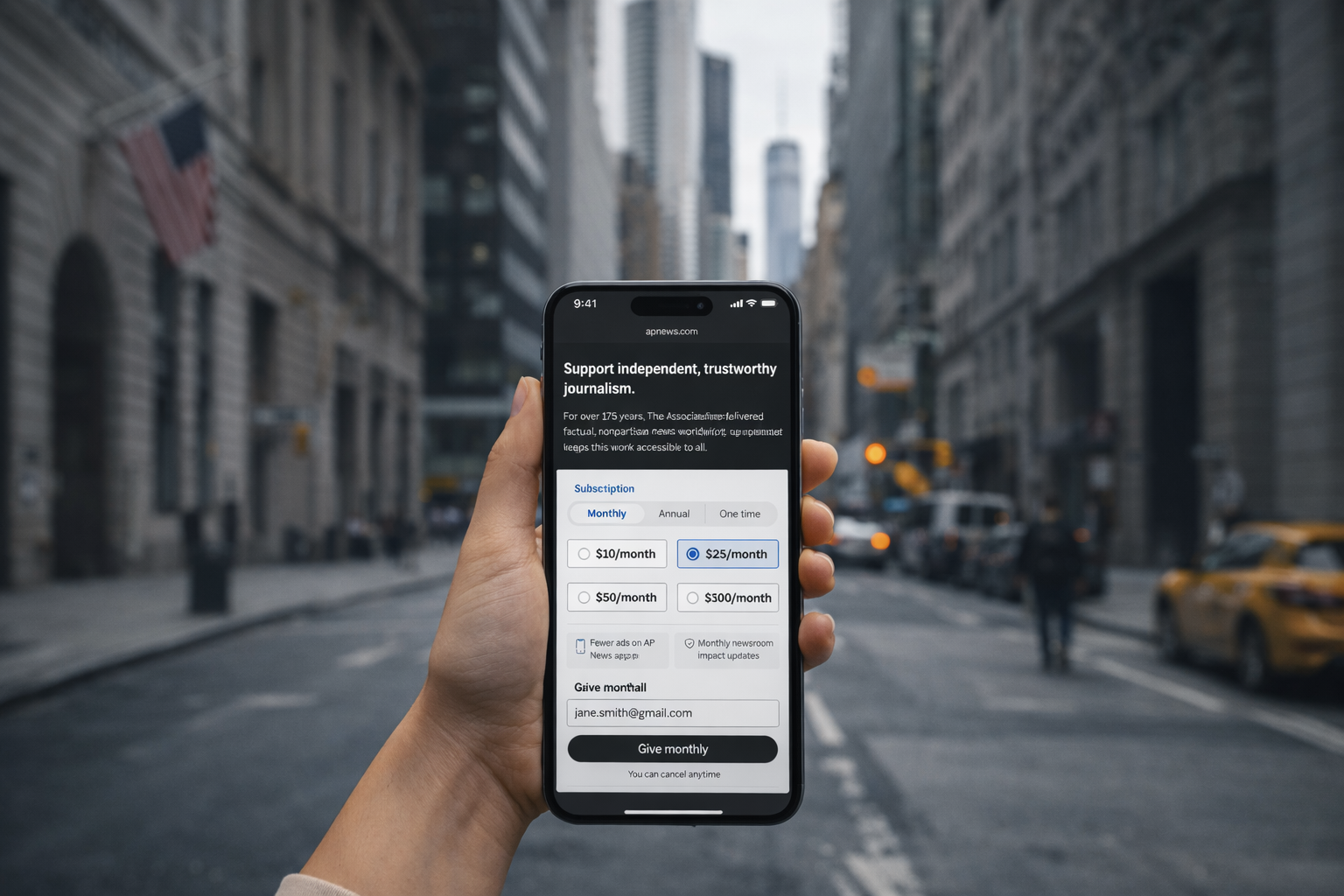
AP News Donations

Main activities
Mobile & Web UI/UX
UX Design User research, friction analysis, A/B testing
UI Design Components, layout, frequency picker
Cross-Platform iOS, Android & Desktop parity
Rebuilt AP’s donation conversion experience to support a $1M fundraising goal
2.5% increase in donations conversion rate, over 30 days.
DONATION FLOW CHALLENGES

Not Mobile first
Key donation controls appeared below the fold on mobile, requiring users to scroll before they could take action adding friction at the moment of intent.
Choice agnostic
Donation frequency options (one-time, monthly, annual) were not clearly presented or preserved, making it difficult for users to understand or select a recurring option.
Friction
Recurring donations required email confirmation, but the messaging was small and unclear, causing many users to abandon the process before completion.
Not Mobile first
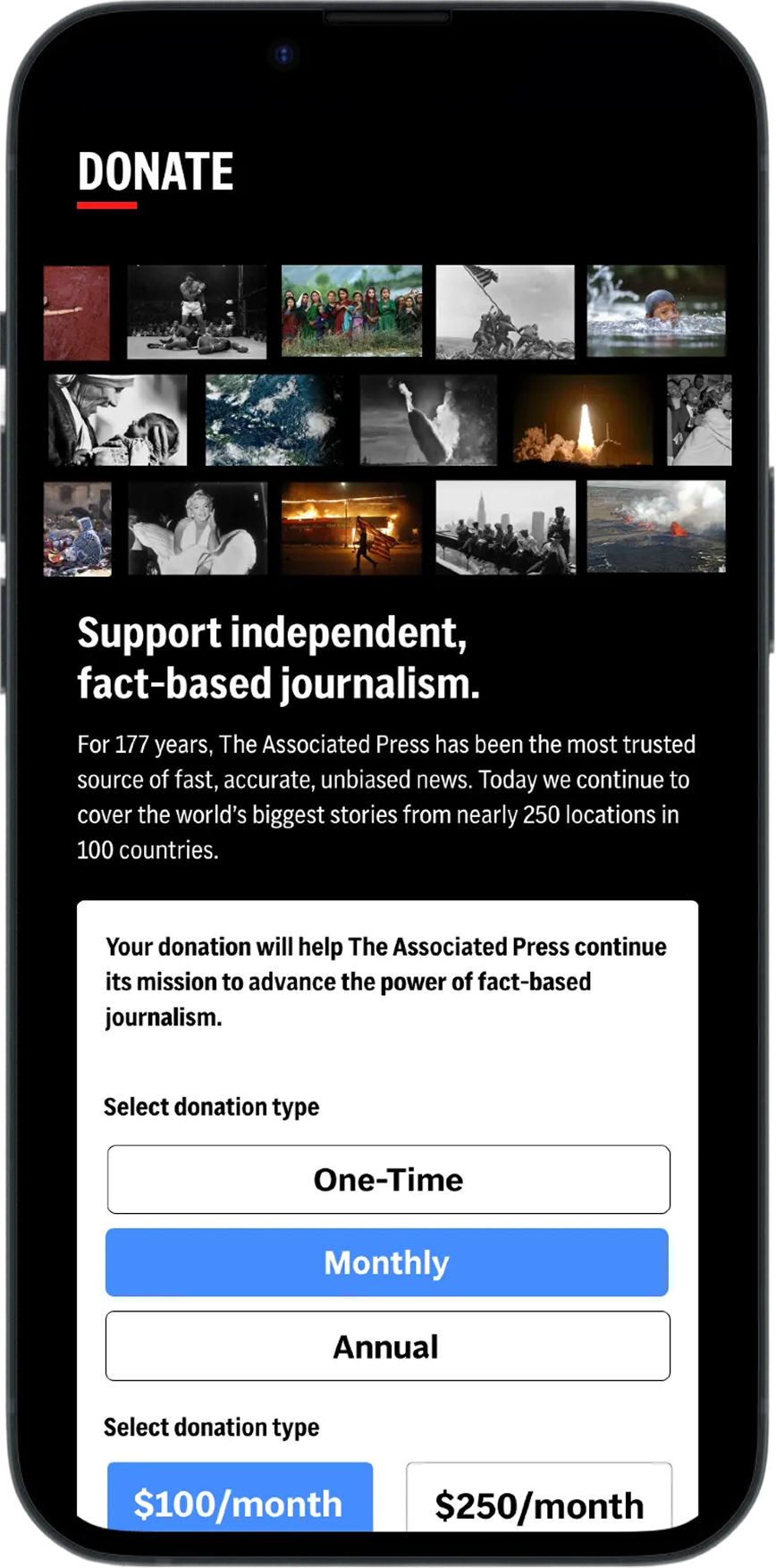
Previous mobile layout required scrolling before users could donate
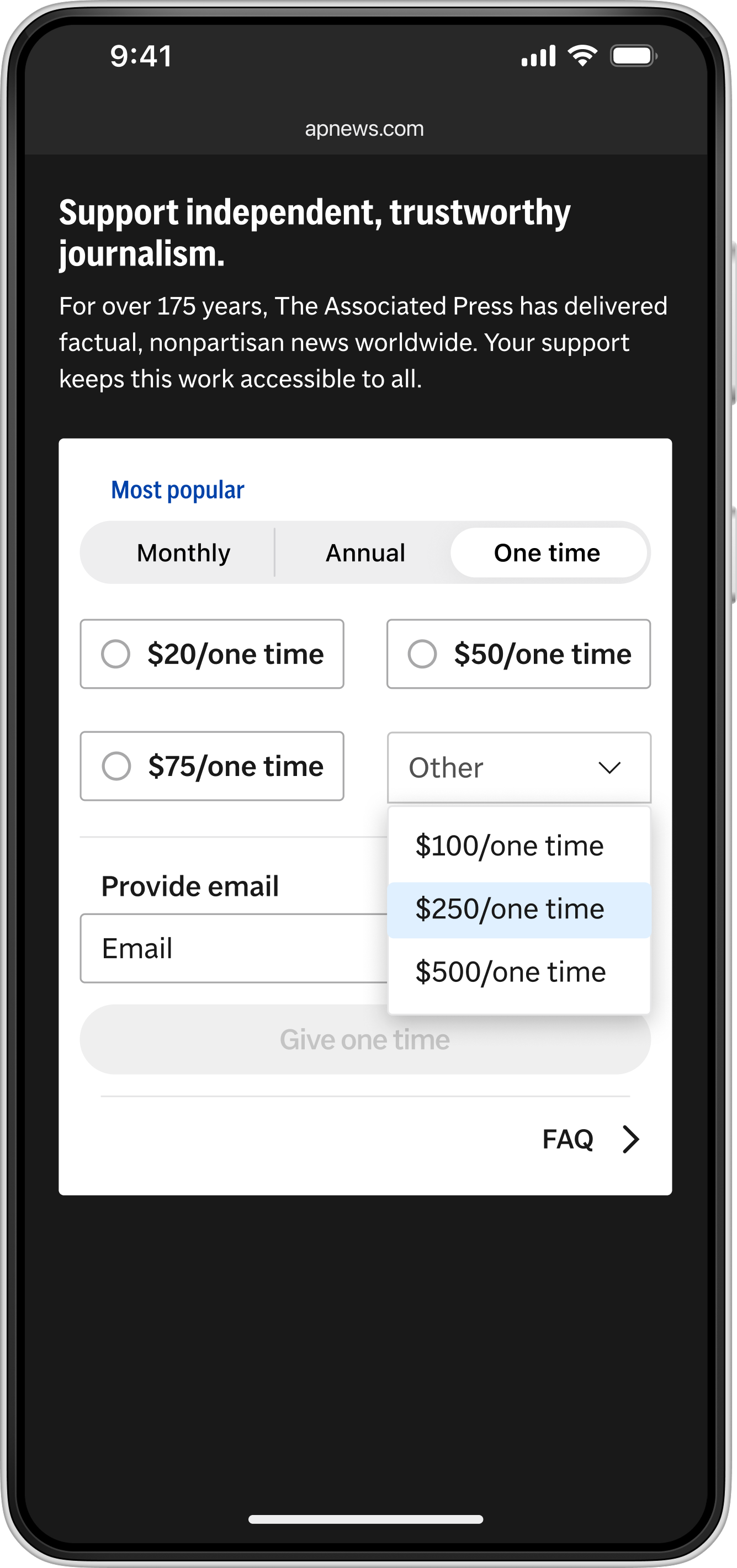
Mobile-first redesign
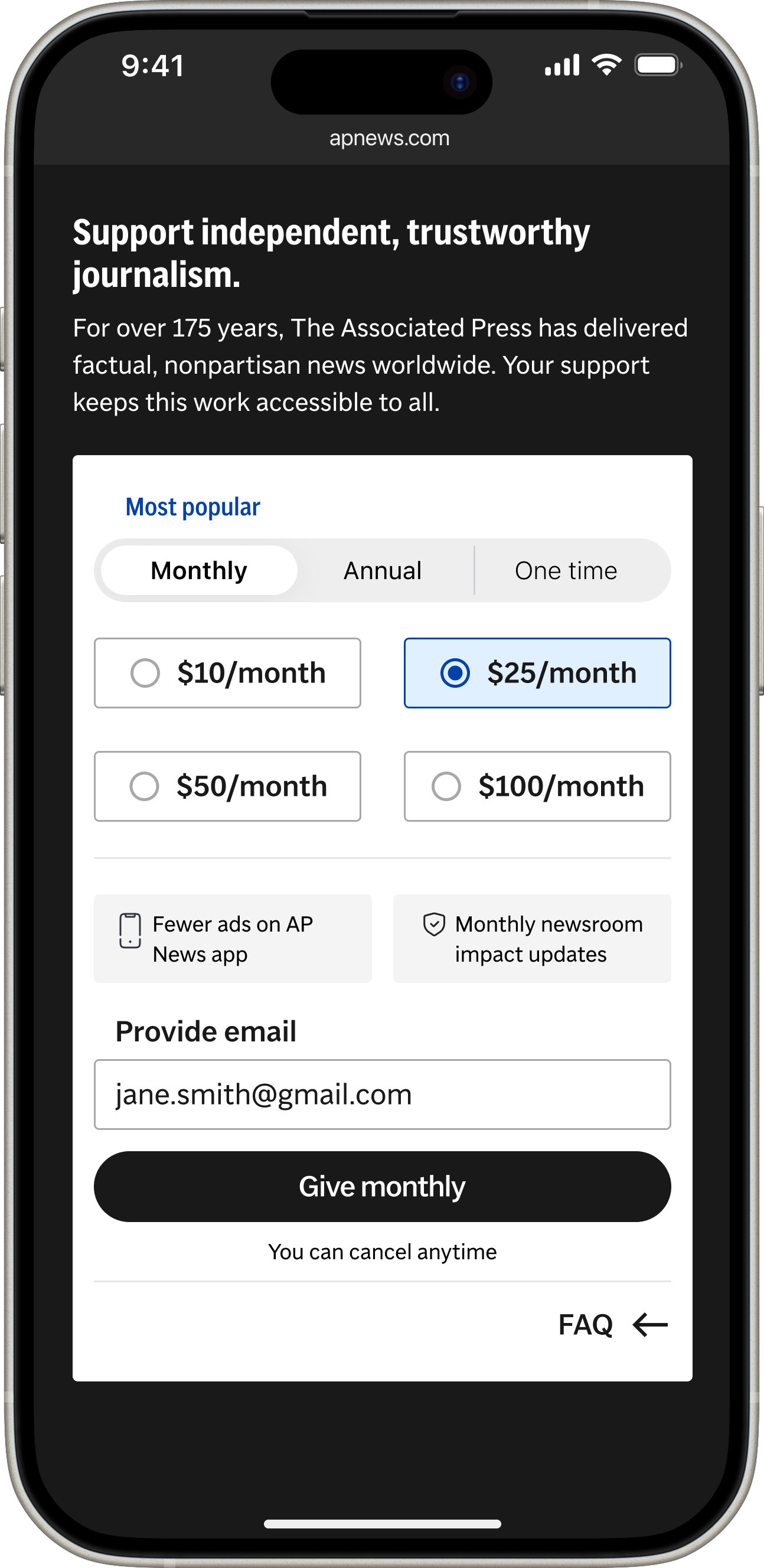
The donation module was moved above the fold, frequency selection was clarified with a familiar iOS style picker, and preset amounts reduced decision making.
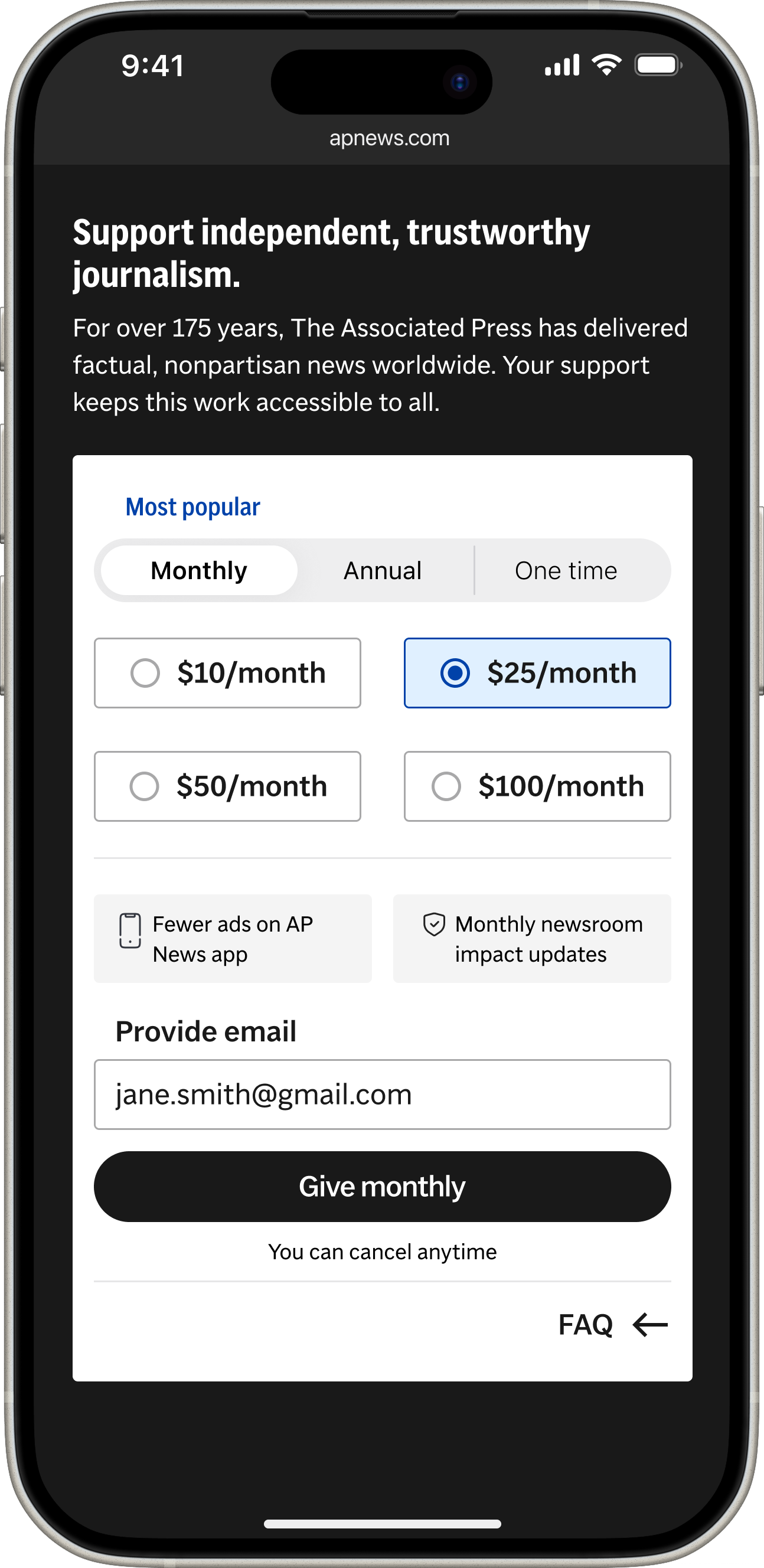
Changes were scoped to existing mechanics to enable fast delivery.
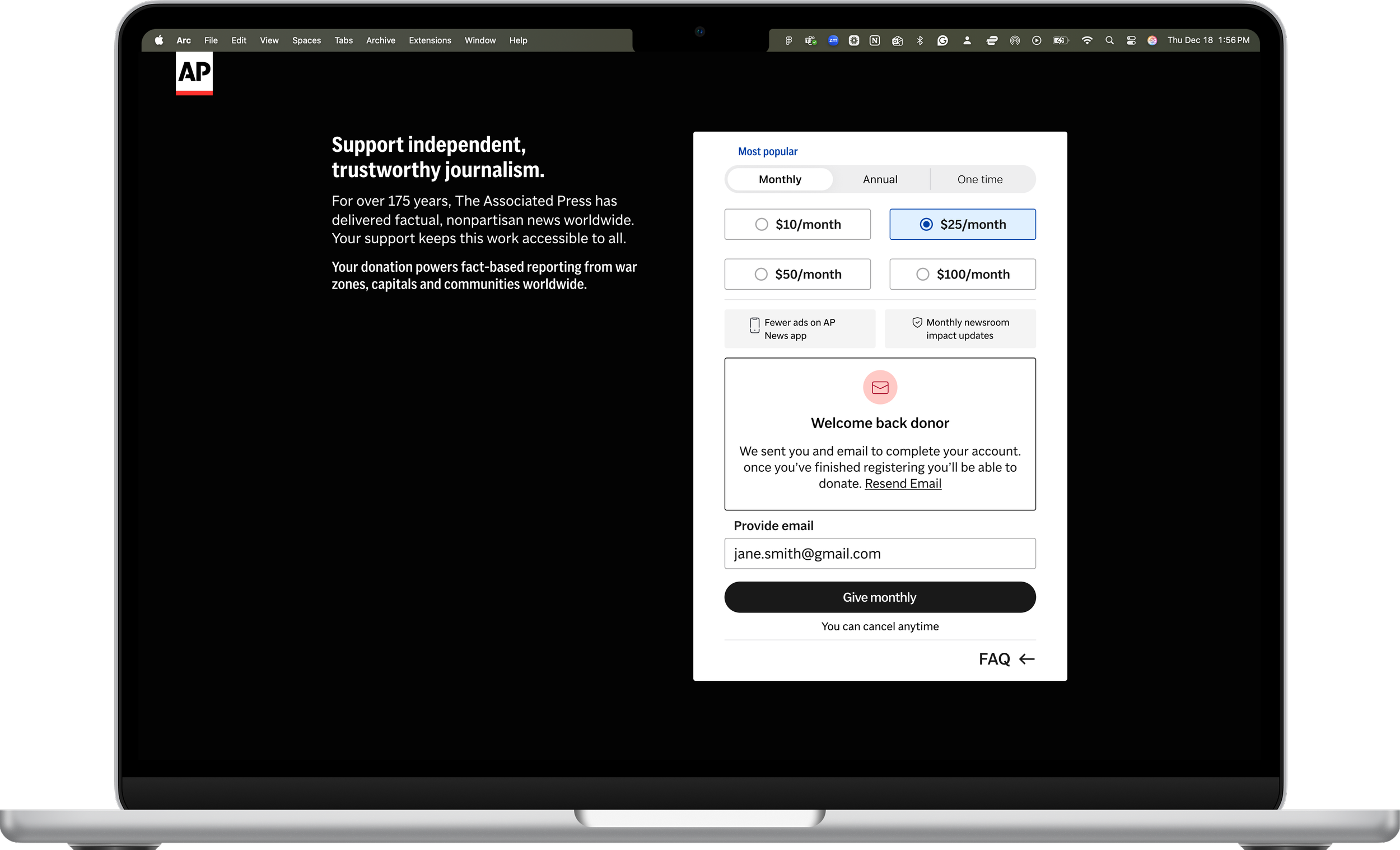
Consistent experience across platforms
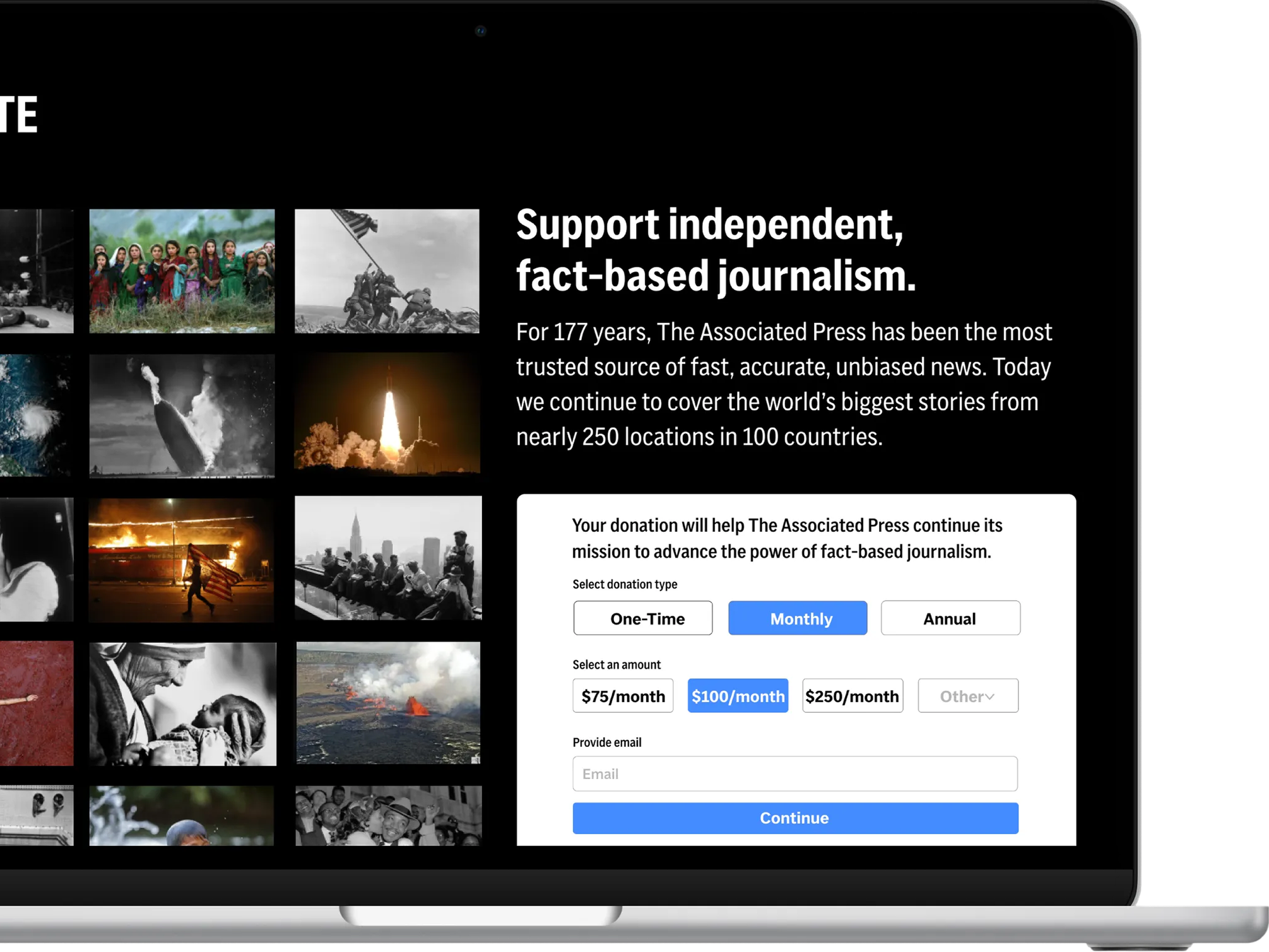
We applied the same above the fold structure and intuitive frequency picker on desktop to maintain a consistent, friction reduced donation flow. This ensured the same clarity and ease of use regardless of device.
OUTCOME
2.5%
Donation conversion lift ↑
30day A/B test
We applied the same above the fold structure and intuitive frequency picker on desktop to maintain a consistent, friction reduced donation flow. This ensured the same clarity and ease of use regardless of device.
Validation
Reducing friction at the moment of intent
by surfacing donation controls and clarifying frequency selection led to a measurable increase in completed donations.
Reflection
This project reinforced how small reductions in friction at moments of high intent can produce outsized gains, even within tight design and technical constraints.
Additional credits: Mike Bowser